In this episode, we dig into how a lethal neurotoxin became one of the most durable drug franchises in pharma history. It’s a story about trade secrets beating patents; a $4 million path to FDA approval; physician-led indication expansion; ruthless tax optimization; and how Allergan built (and defended) an entire aesthetics empire around botox.
THE KEY TAKE-HOMES
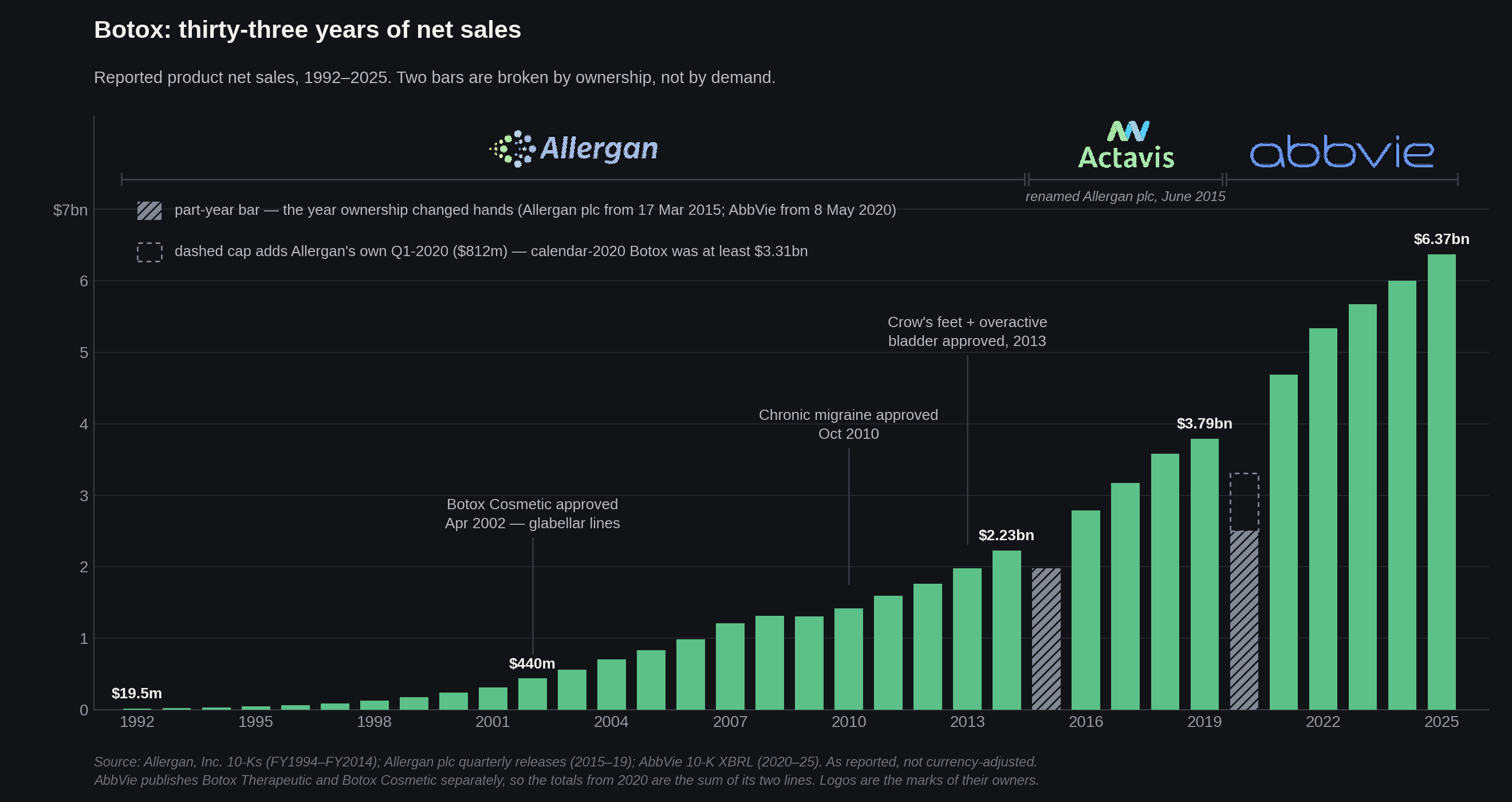
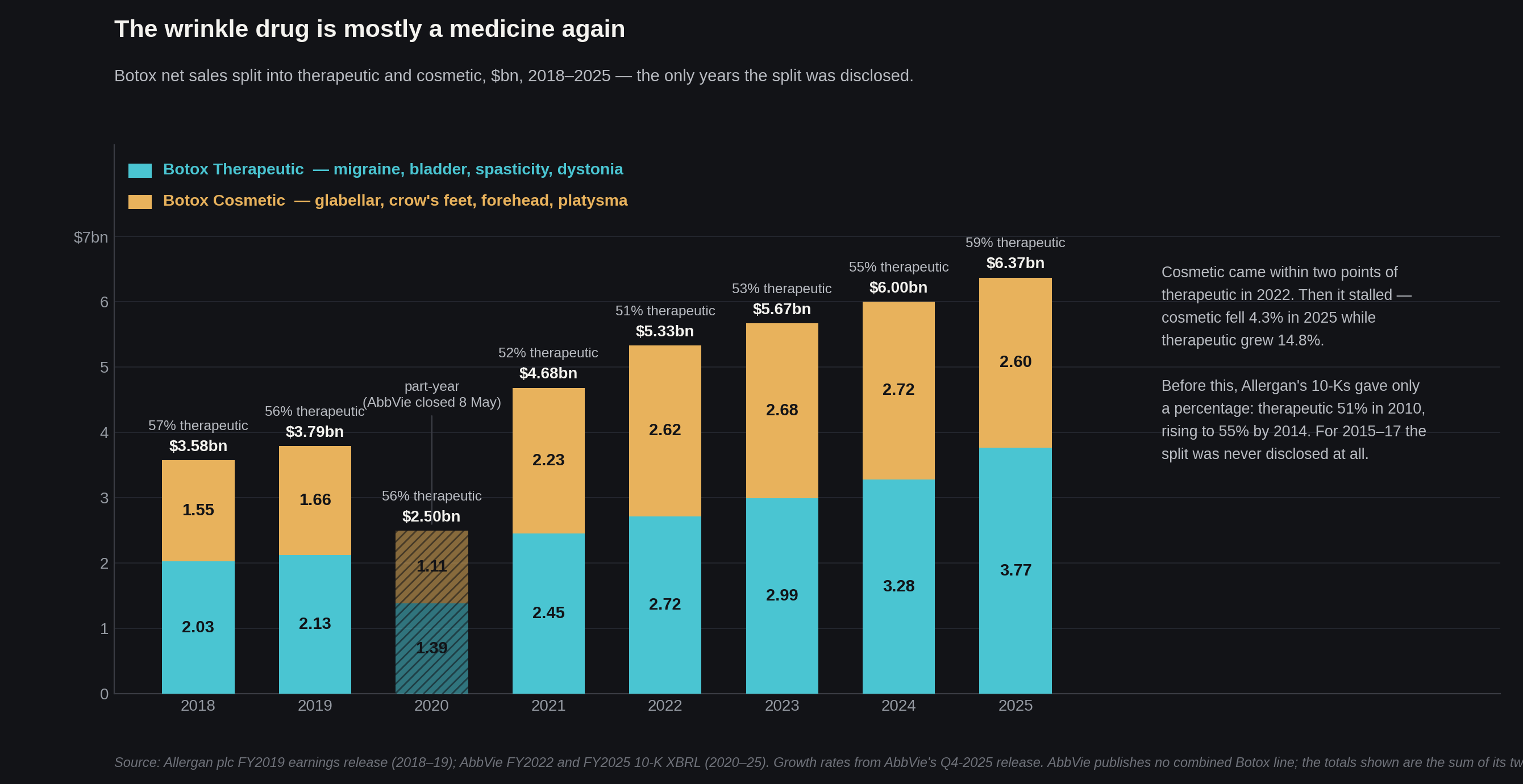
A drug that looks like Coca Cola than Lipitor: protected more by trade secrets than patents; a half cash-pay business; huge brand name recognition; recurring revenue every quarter or your face looks old; and sales that has compounded over decades, over an ever-increasing number of indications. The incretin revolution that is playing out today is reminding the industry how attractive the aesthetics category is, and getting them to think about what other direct-to-consumer opportunities exist.
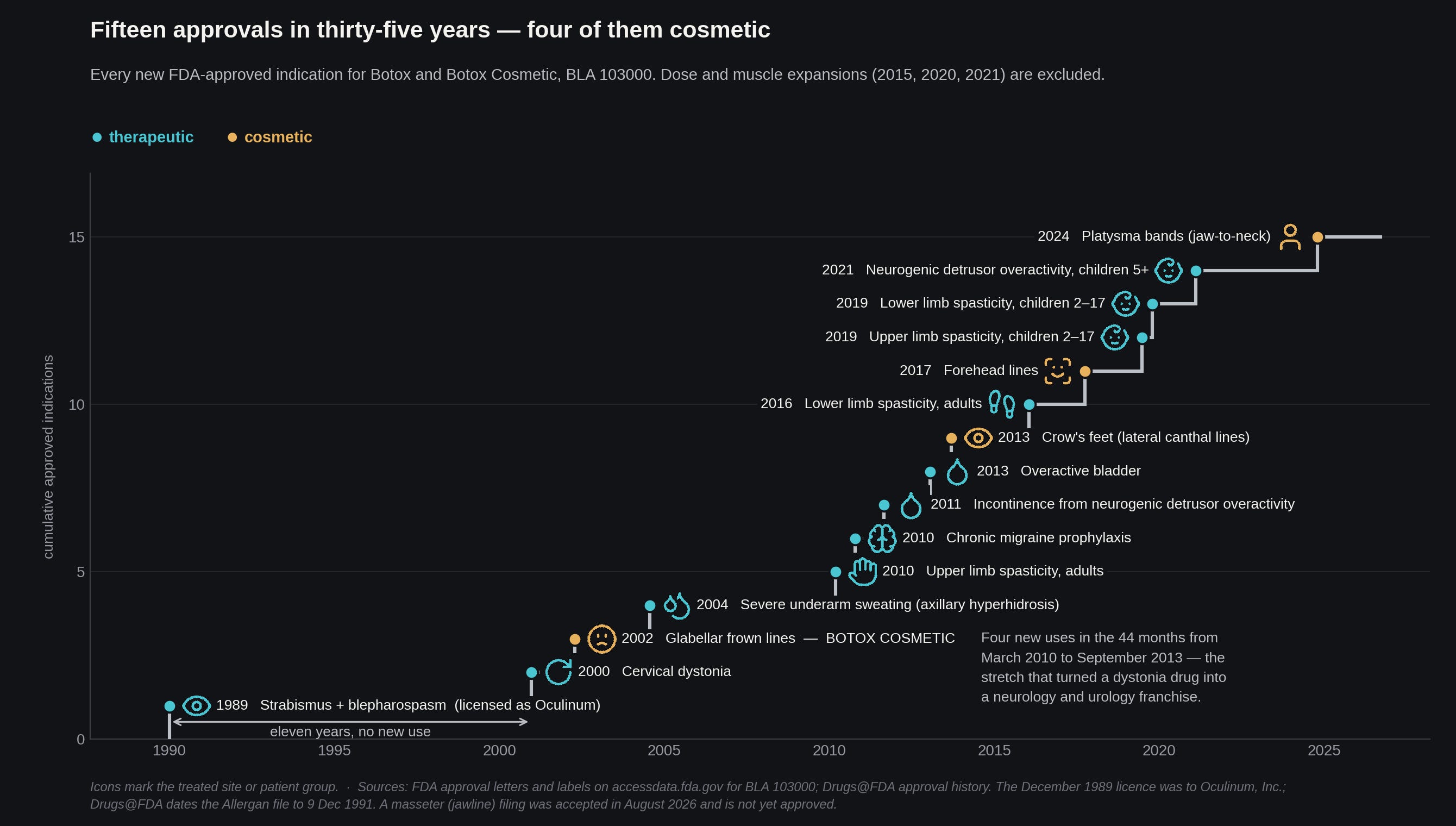
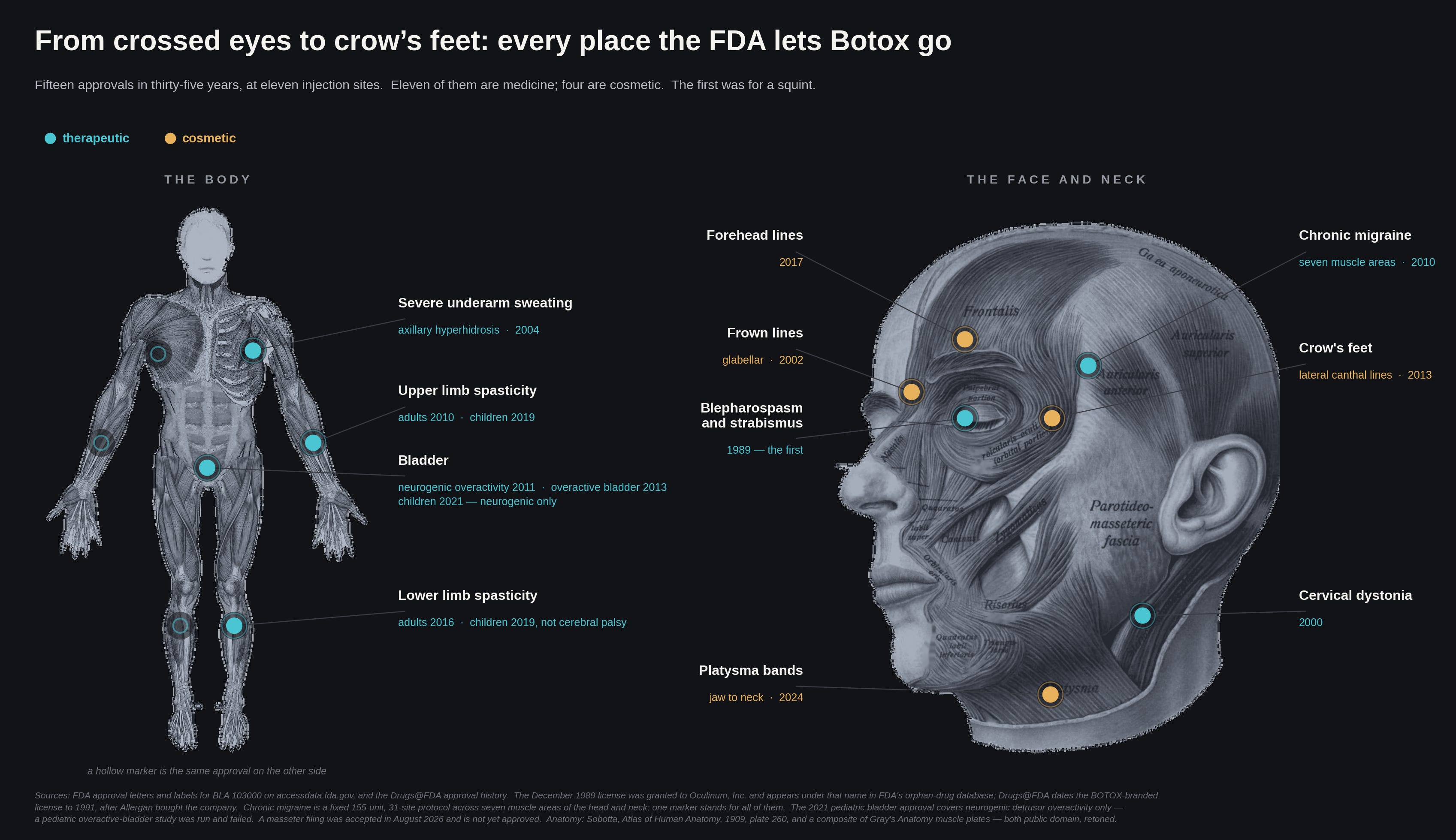
An extremely potent, fast-acting, all-natural, locally-acting muscle relaxant (perfected by mother nature) ends up having huge indication expansion potential– turns out muscles are part of many patho-biological circuits! (It also helps when each distinct muscle paralyzed for aesthetic + therapeutic purposes is a distinct approval!).
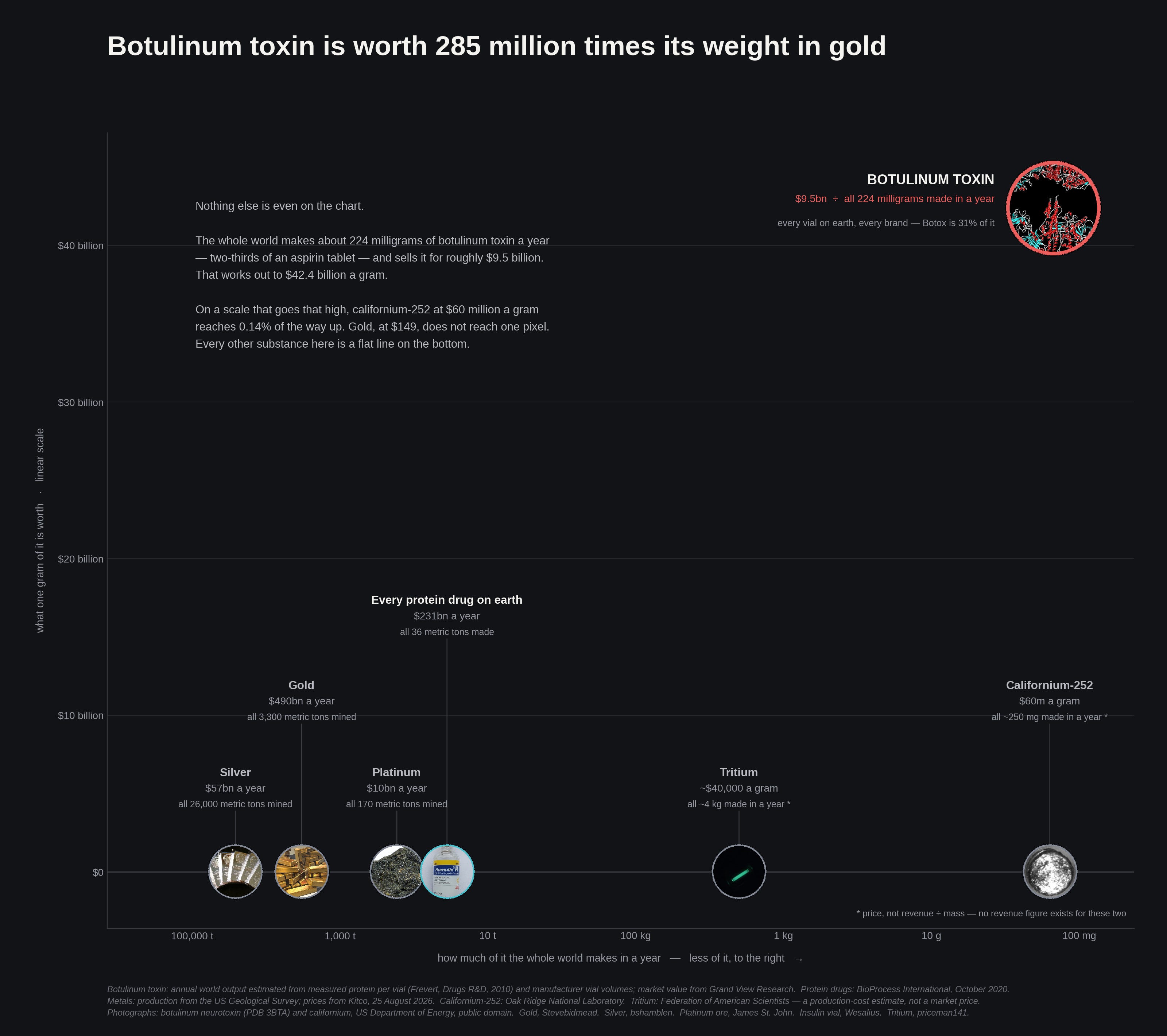
Unorthodox (but FDA approved) CMC can be a moat— if your drug is a 500kDA non-covalent complex, partially activated in the host strain; if you have patented the potency measurement; and you happen to squeak past the FDA with a pretty lightweight CMC section– it’s going to be hard to convince the FDA that you’ve made a biosimilar! (It also helps when your drug is an extremely potent neurotoxin…)
It cost physician-scientists all of four million dollars to push a first-in-class biologic (then called Oculinum) all the way through approval. Drug R&D can be cheap, but only when a whole set of circumstances align: a drug substance and delivery system perfected by mother nature; a drug so potent that academics can manufacture the drug for you; an effect size that is huge and immediately visible; and a community of doctors so eager to participate in clinical trials that they paid for the drug!
New biologic drug modalities have a very specific advantage– market exclusivity can last longer than normal, as the FDA figures out the specifics of how the generic/biosimilar process is going to work (especially with potent neurotoxins). It happened with botox, it happened with antibodies, and it will most likely happen with ADCs and gene therapies.
Focusing on selling into a niche physician customer base can be a competitive advantage– Allergan trained + properly incentivized their sales base to listen to the needs of the ophthalmologist, selling them the whole basket of goods needed for their practice; they then rinsed and repeated in the aesthetics space. This focused approach both (1) gives you great insight into what new drugs to develop and (2) opens you up to the serendipity of selling niche products with unexpected indication expansion potential (given the low marginal cost of commercialization in this context).
A playbook for getting FDA approval for a purely aesthetic indication: get the drug approved in a niche indication, then leverage massive off-label use to force the hand of regulatory bodies.
Botox was the perfect context for successful physician-led indication expansion: a drug that’s potent, works very fast, locally and reversibly, and targets a pathway implicated in a variety of diseases. Unfortunately, most drugs in our industry do not fit those criteria….
The playbook for selling drugs into a cash-pay, direct-to-consumer market: align incentives, create a whole bundle of related products (the “allergan stack”) and aggressively cross-sell a whole bundle of related offerings to keep everyone loyal to your specific stack. The aesthetic bundle is currently botox, fillers, implants and skin treatments– it may soon include weight loss and muscle building agents…
HIGHLIGHTS
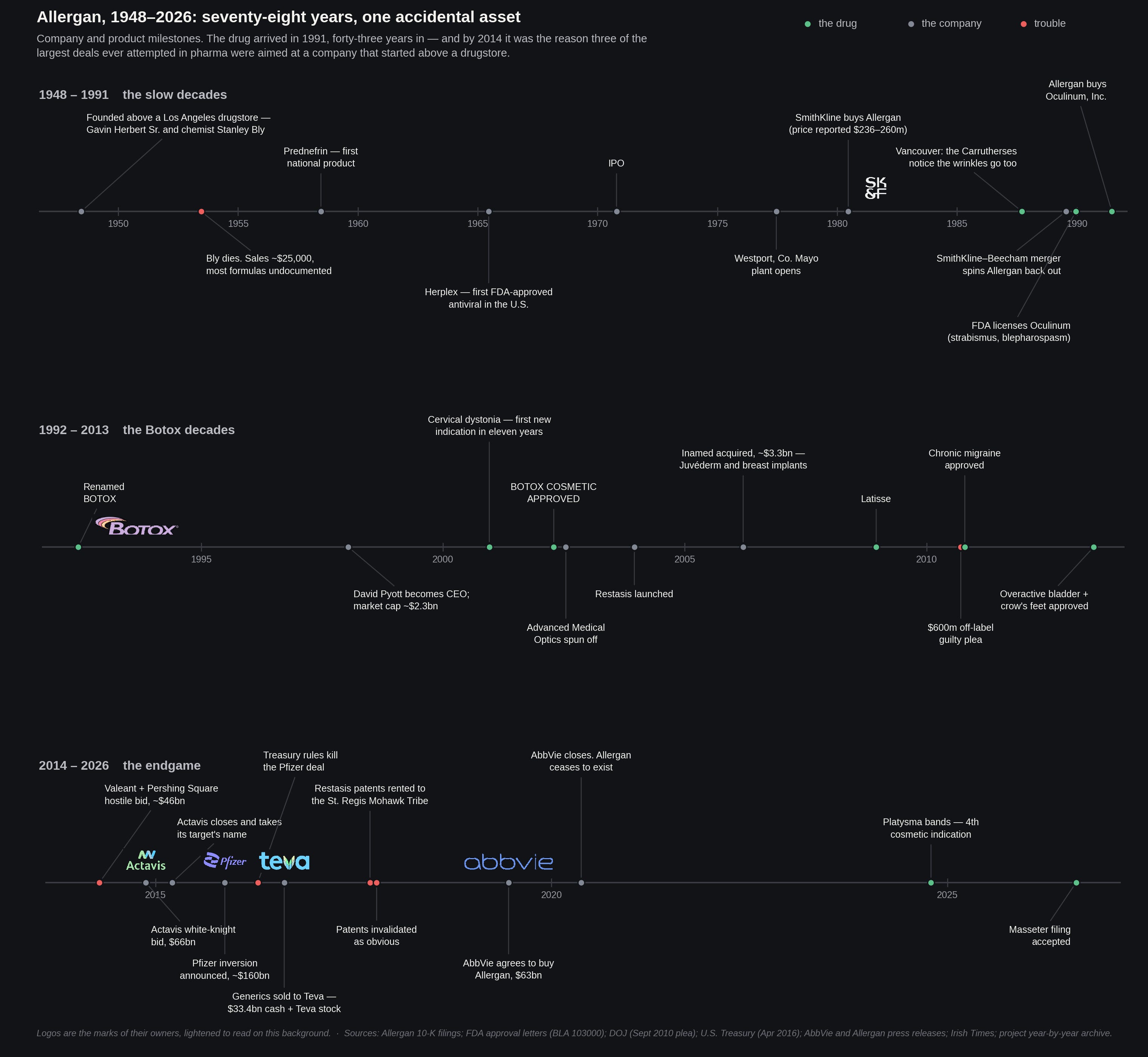
7:56 “It can be expected that the fatty acid will be of therapeutic value” A young health officer groks the therapeutic potential of botulinum… in 1822
15:02 The Black Moriah: the American military pushes forward neurotoxin research, until Nixon shuts it down.
18:48 The November 1979 purification of neurotoxin… that would satisfy decades of clinical+commercial needs.
26:41 An eye doctor gets some MTA-free neurotoxin, shipped by USPS.
33:30 First subject first dose: hands shaking as the first strabismus patient is dosed in the ICU
44:01 Oculinum Inc, the $4m BLA (not a typo), and bootstrapped production of the neurotoxin.
55:41 Two blocks from Oculinum, a reminder of what bad CMC can get you
1:00:01 The early days of Allergan: building a stack of products for the unique physician group that is ophthalmologists.
1:20:33 Oculinum gets sold to Allergan, and the second time Schantz ever got upset.
1:39:55 The transition to aesthetics– The Carruthers test Botox on their receptionist, then on themselves.
1:47:47 Explosive off-label use forces the FDA’s hand, ultimately landing them one of the first purely cosmetic FDA labels.
1:54:20 The David Pyott era– expanded uses of the botox, and creation of the allergan bundle of aesthetic products.
2:07:30 The Valeant hostile takeover attempt– Allergan tries to turn itself into a porcupine to fend off Bill Ackman et al. “Those people should have been in jail.”
2:24:11 The Brent Saunders era: look better, feel better, and find the efficient frontier of financial optimization.
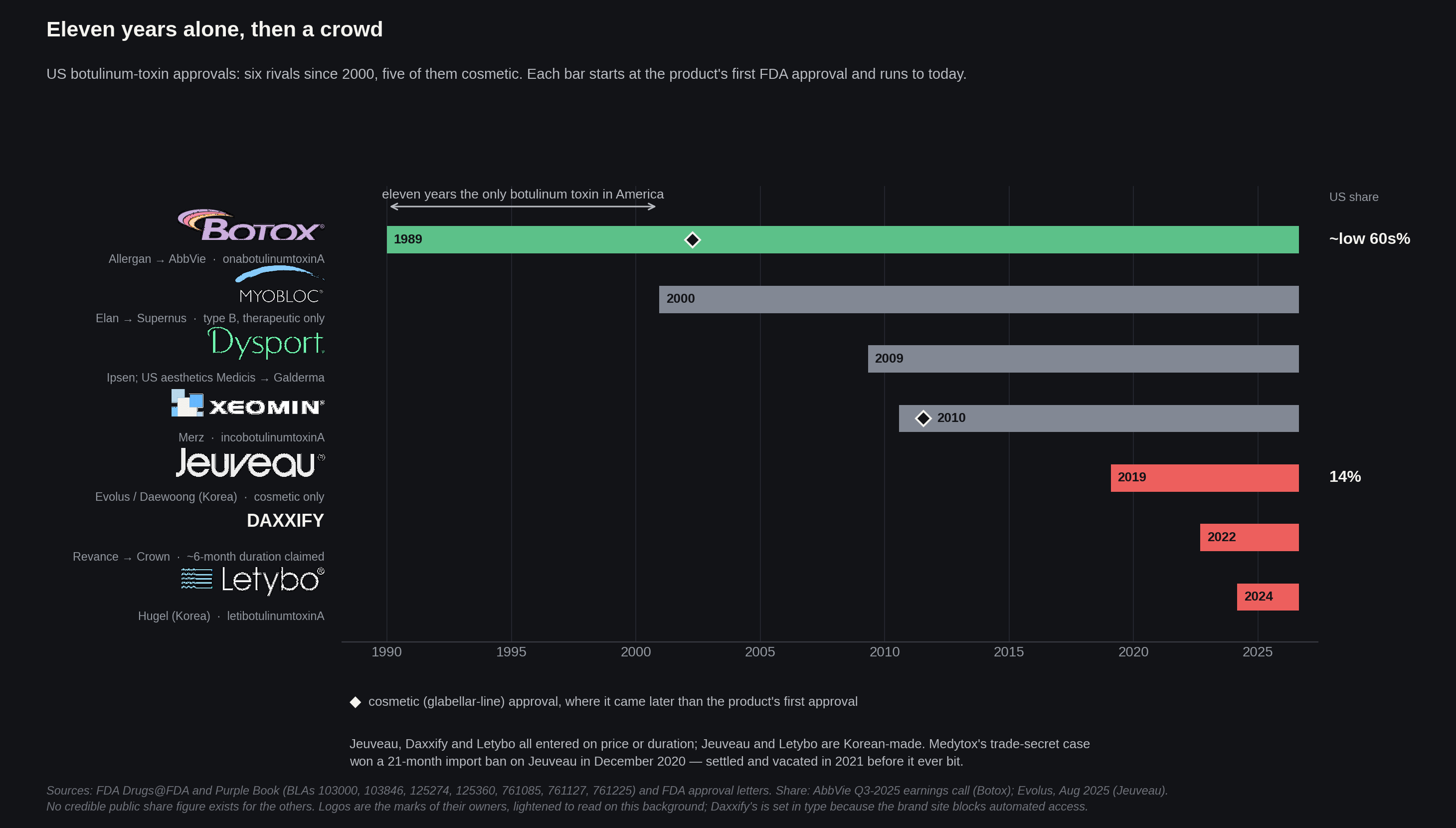
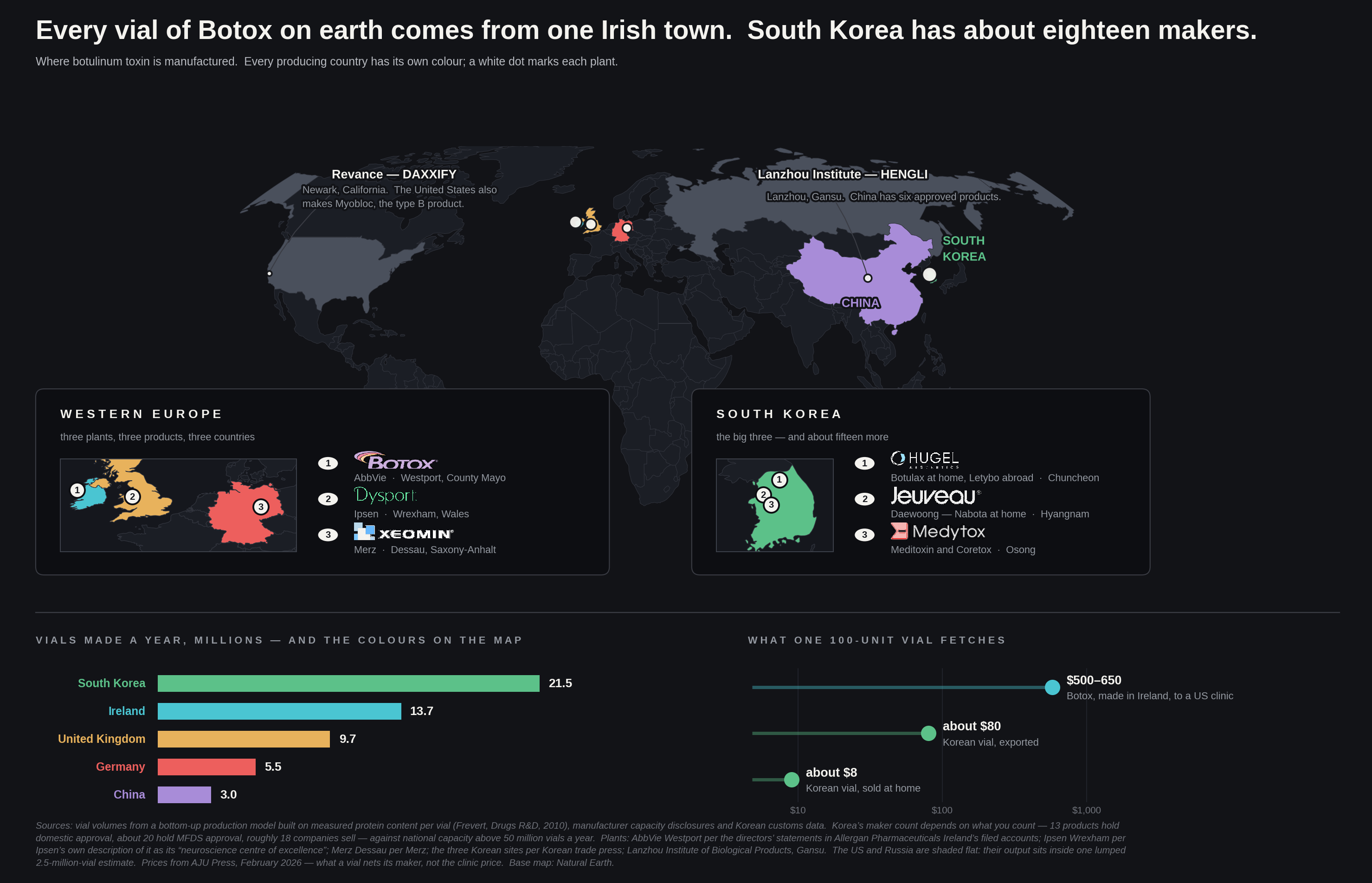
3:04:13 Competitive dynamics with the Korean neurotoxins: battling botox on price and duration of action. “I’m wearing Juveau!”
We hope you enjoy it! And don’t miss what’s next — subscribe on Apple Podcasts or Spotify so new episodes land straight in your feed the moment they drop. No searching, no scrolling — just show up and listen. 🎧
Matt & Alex
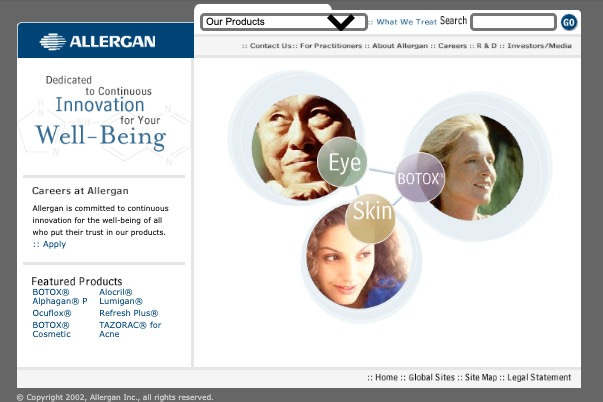
Allergan’s 2002 website. A clear focus on the eye, skin and botox!
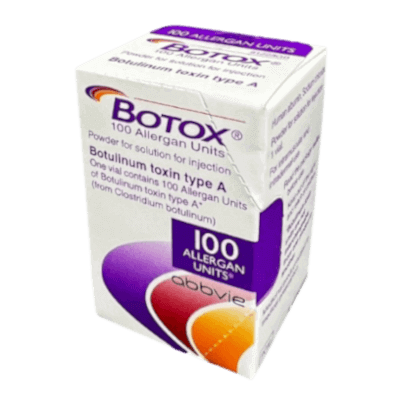
“100 Allergan Units”— note how Allergan owns the potency assay for the neurotoxin— another barrier to biosimilars.
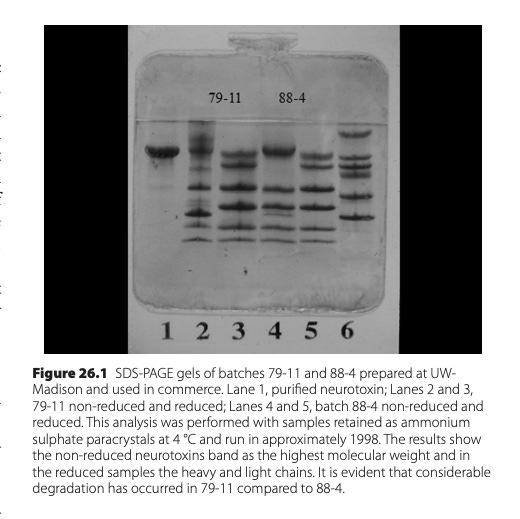
Up until 1997, patients were still being injected with toxin made in 1979 (the “79-11” batch). Evidence of degradation is obvious on SDS-PAGE gels, and this “old botox” had immunogenicity issues.
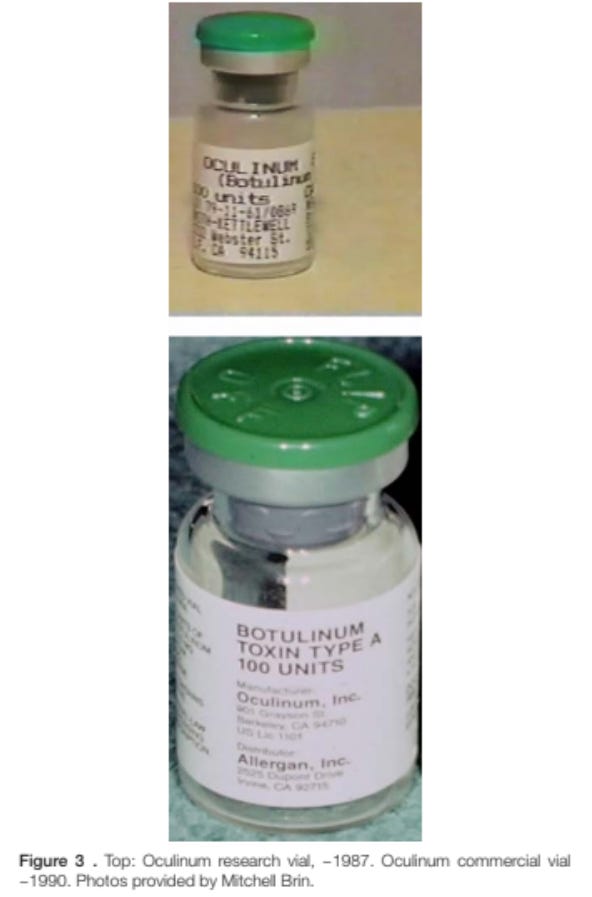
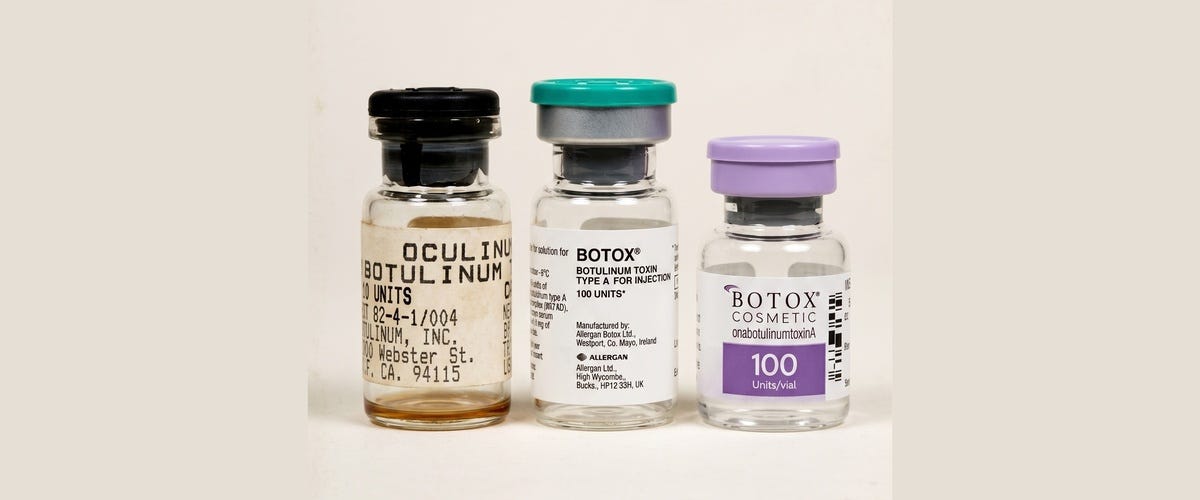
Early vials of Oculinum, before its rebranding to botox. The drug substance was made in wisconsin, shipped to berkeley, then put in vials in New Mexico.
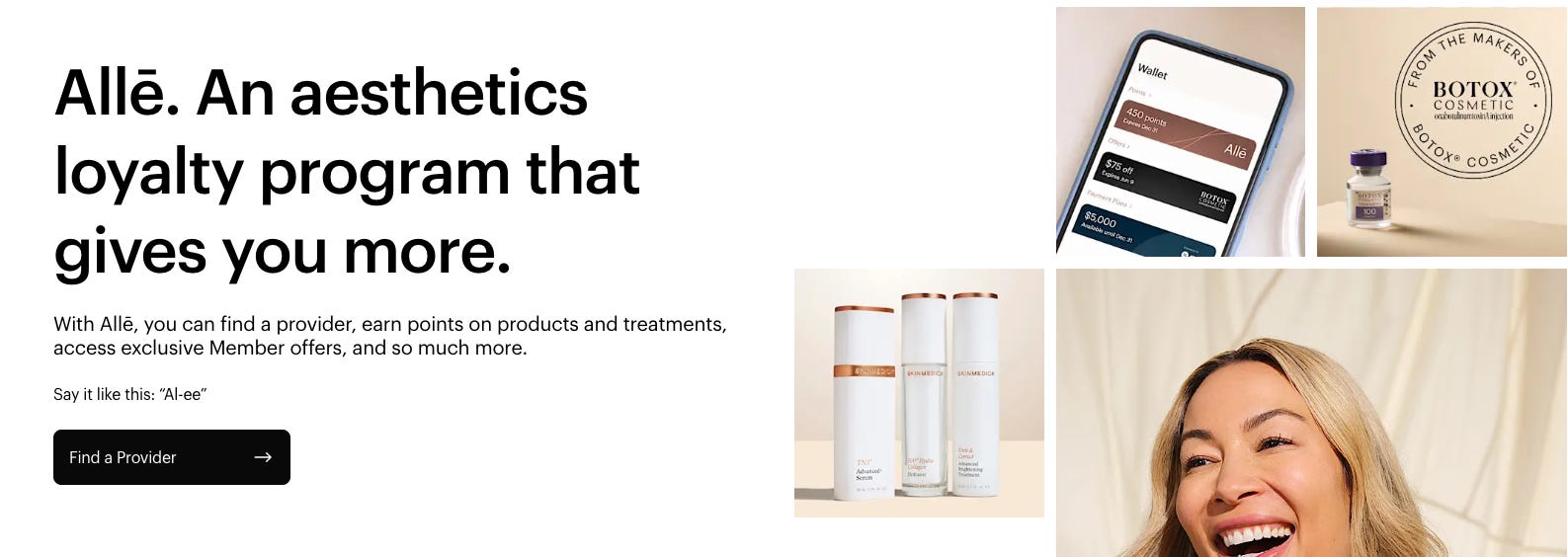
The allergan bundle— first called Brilliant Distinctions, rebranded to Alle. A whole suite of products to enforce injector and customer loyalty.